
I’ve just published my annual reading list for 2025 here, (a little late, but its still January!) as I’ve done for over a decade. Do check out the whole thing, but here are a few of my particular highlights from this year’s books, which, as always, are a bit of an eclectic mixture.
Everything is Tuberculosis: The History and Persistence of our deadliest infection, by John Green
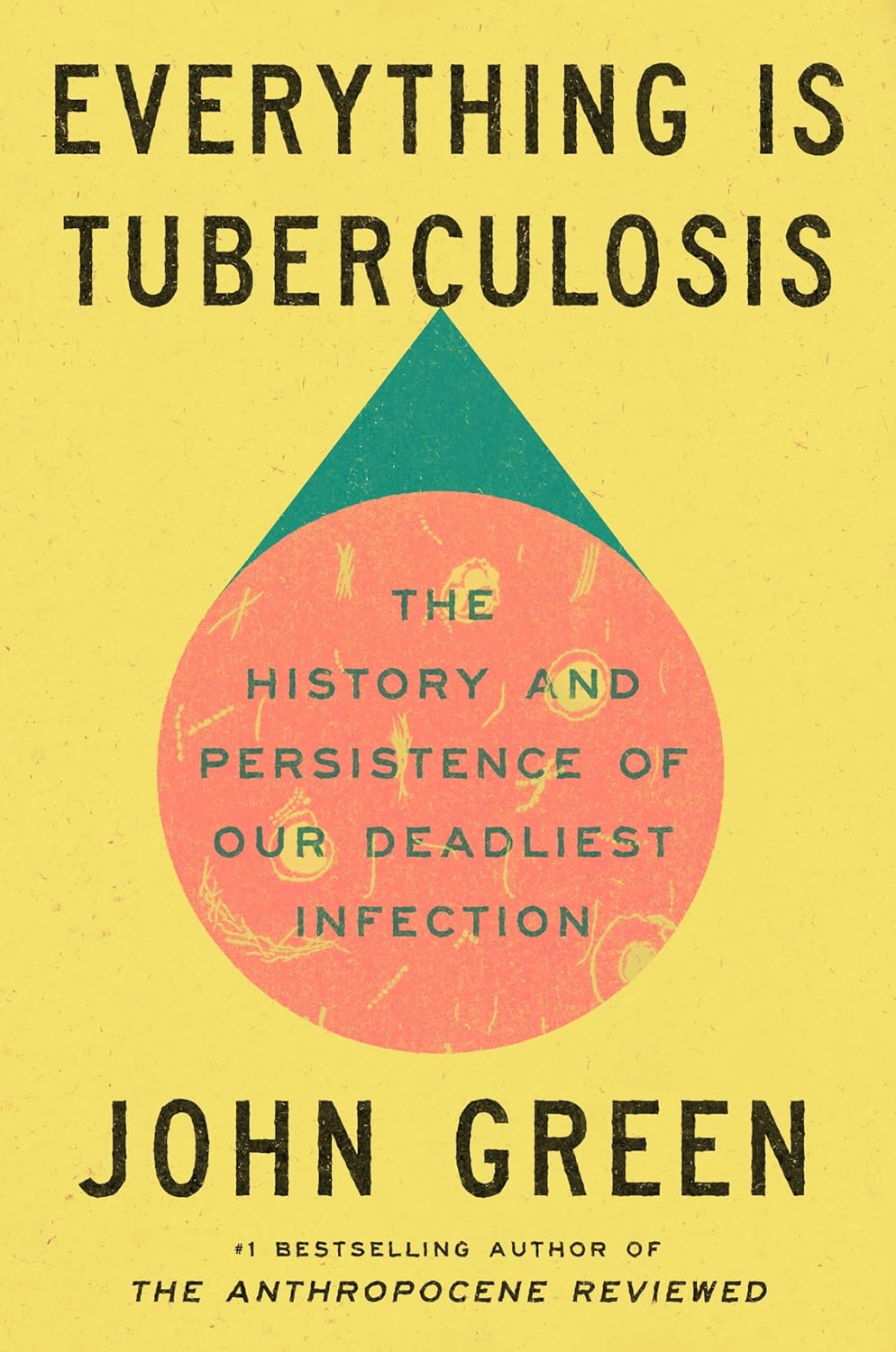 John Green is most famous (to me) as one half of the vlogbrothers, but he is also a prolific author, fiction and non fiction, and this book is a passionate look at an infectious disease that continues to kill a frightening number of people every year. Back in the 19th century, when it was known as consumption, it was feared, but inescapable, with many romantic figures (such as John Keats, and several Brontes) dying of tuberculosis. It was also frequently used in fiction as a romantic way to kill off a beloved character. At its peak it infected most people in Europe, and the unlucky minority who went on to develop the clinical disease were mostly faced with a death sentence.
That is still true today in many parts of Africa, and John Green introduces us to several people afflicted now, and talks us through their experience of a disease that in rich parts of the world is almost 100% curable.
Both the historical experience and the current one make gripping reading – I don’t think I had realised just how prevalent tuberculosis was before antibiotics, and just how much it changed the culture. And the current experience of those in countries which still have high prevalence makes grim reading.
 Frostbite: How Refrigeration Changed our Food, Our Planet, and Ourselves, by Nicola Twilley
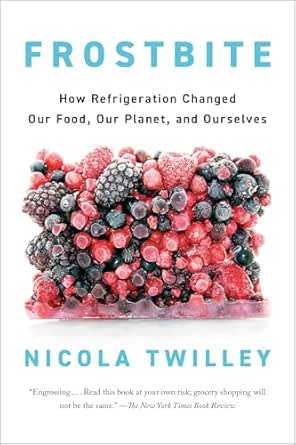
This is a classic of the deep dive genre, for me. And Twilley succeeds with this one. As an Australian, I was familiar with the massive change that happened to our economy when long distance refrigeration in ships became possible, and people in Britain started eating Australian sheep and cows. That is a tiny part of all the things that have changed because of refrigeration. The kinds of food we eat are those that are easy to refrigerate for transport, for example. The planet has far more big mammals like sheep, cows and pigs, because their meat can be transported all over the planet.
And fruits and vegetables that don’t refrigerate well (some kinds of apples, for example) have gradually disappeared from our diets as economically they don’t make enough sense to grow for the small areas they could be transported to.
 Collaborating with the Enemy: How to Work with People you don’t agree with or Like or Trust, by Adam Kahane
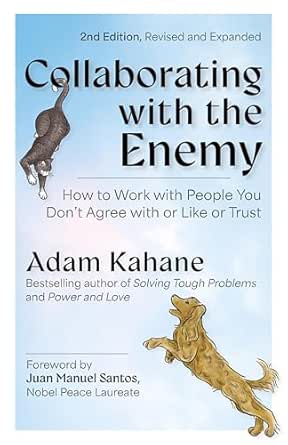
This book is written about extreme cases (of people still in the middle of actual civil war) who have managed to work together to improve outcomes. While most of us are far from that situation, most of us have to work some of the time with people (as the title says) that we don’t agree with, like or even trust. This book both helps you think that through, but also makes the case that in many ways, if you manage it, that is the most productive way of working with others, as the rewards can be enormous. In particular, one of his key points is that people who have a long history of distrust, and potentially don’t even agree on what the problem is that needs to be solved, can still find ways to work together to improve the situation.
Kahane sets out his theory of stretch collaboration. I’m going to quote it fairly fully, as it is the thesis of the book.
Stretch collaboration requires us to make three fundamental shifts in how we work. First, in how we relate with our fellow collaborators, we must stretch away from focusing narrowly on the collective goals and harmony of our team, and move toward embracing both conflict and connection within and beyond the team. Second, in how we advance our work, we must stretch away from insisting on clear agreements about the problem, the solution and the plan, and move toward experimenting systematically with different perspectives and possibilites. And third, in how we participate in our situation – in the role we play – we must stretch away from trying to change what other people are doing, and move toward entering fully into the action, willing to change ourselves.
These stretches require us to pluralise: to move away from paying attention only to one dominant whole, one optimum plan, and one superior leader, toward attending to multiple diverse wholes that are part of wholes, multiple emergent possibilites and multiple co-creators.
The rest of the book sets out how and why to behave this way, and it was eye opening. It’s going to be one of those books I dip into frequently.
 The Wide Wide Sea, the Final, Fatal Adventure of Captain James Cook, by Hampton Sides
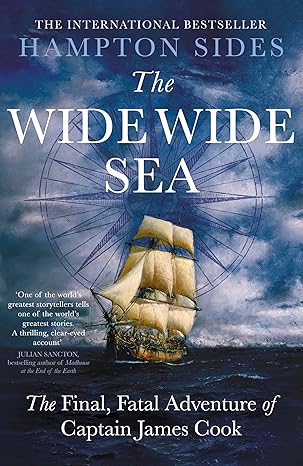
This book made quite a few best of lists last year, and I did enjoy it. It’s the story of Captain Cook’s final voyage, the one where he was killed in Hawaii, after visiting a vast array of islands around the Pacific. There were many fascinating new facts for me in this book, including that this voyage was the first European contact with Hawaii, and that British sailors first got into tattooing on this voyage. Whether or not other people had figured it out, this was the way British people discovered tattooing.
Hampton Sides makes quite a nuanced case for Captain Cook and how much blame he should get for the horrors of colonisation that followed his voyages around the Pacific. Cook does seem to have been genuinely interested in the cultures he was discovering, and reasonably respectful, particularly on his first two voyages. But on this final voyage, he seems to have become much more of an authoritarian captain, which also spilled over into how he dealt with indigenous people on many of the places they visited.
Perhaps it was inevitable, but it seems that he became more and more arrogant, and believing in his own rightness (probably not helped by many Hawaiians believing he was a god), which went badly for him when he didn’t want to leave Hawaii.
 Unsettled: A journey through time and place, by Kate Grenville
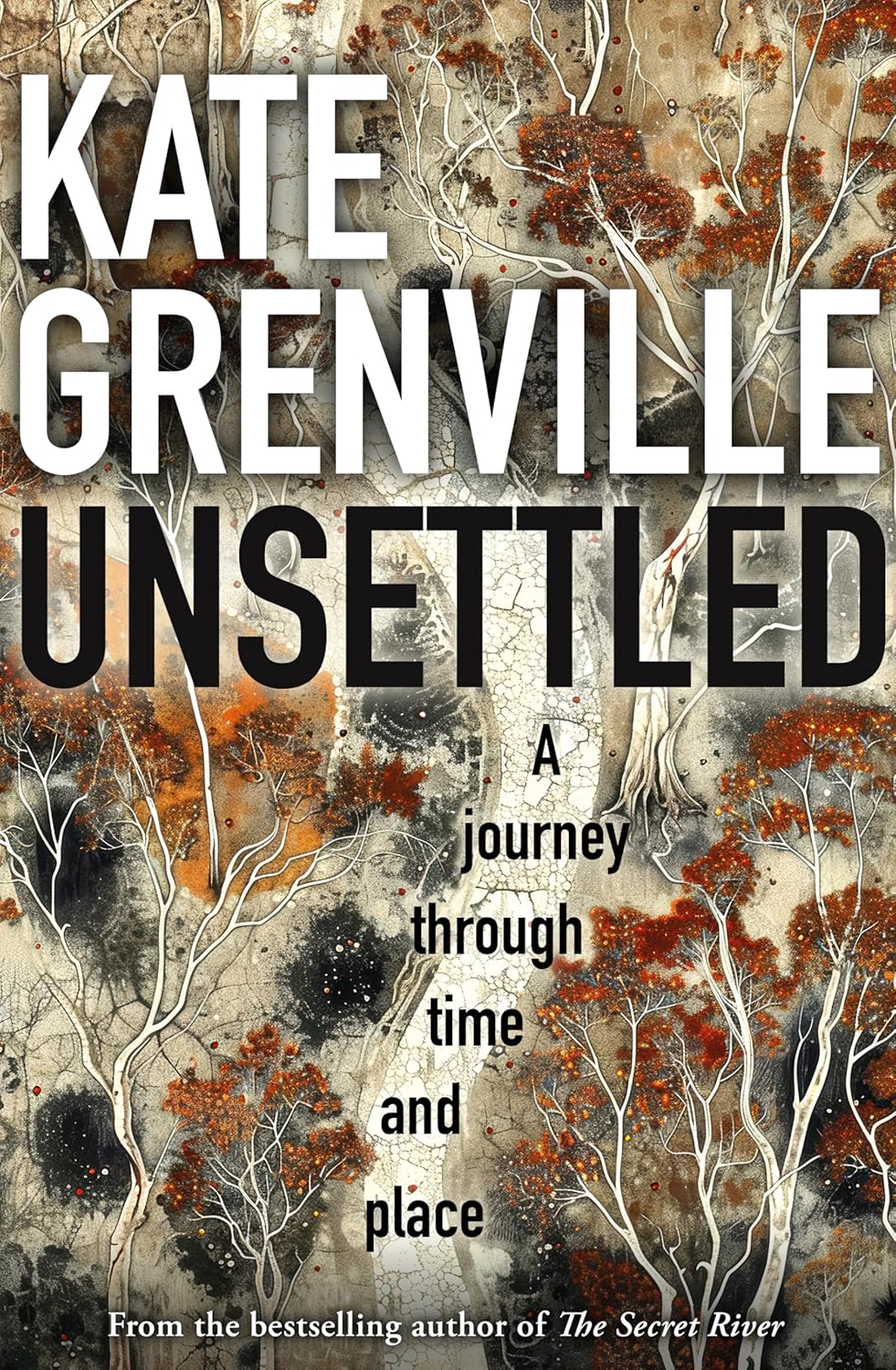
Kate Grenville is the author of many fictional Australian works, most famously the Secret River, a fictionalised story of her ancestor Solomon Wiseman, who settled at Wiseman’s ferry in the early 19th century. Paranthetically, Mark McKenna (the author of my next two books) got into an argument with Grenville about the level of historical accuracy or not in her previous books.
Grenville is descended from many early settlers of NSW and Queensland, and in this book, she traces their footsteps and wrestles with her own responsibility for the injustices and tragedies inflicted by her ancestors on the original inhabitants of the lands that they settled. I’ve often thought about this issue – what responsibility to the present day beneficiaries of the British theft of Australia have? Grenville doesn’t have a firm conclusion, but my takeaway was that acknowledgement and understanding are the first step. After reading this, I saw a parallel with the various reactions to World War II – the German response has been to acknowledge and apologise for the terrible things that were done, in contrast with the Japanese response which has been much more of a washing of hands. Our Australian response to the frontier wars has been much more like the Japanese response. Acknowledgement doesn’t change the past, but it’s better than pretending that nothing bad happened.
 Ministry of Time, by Kaliande Bradley
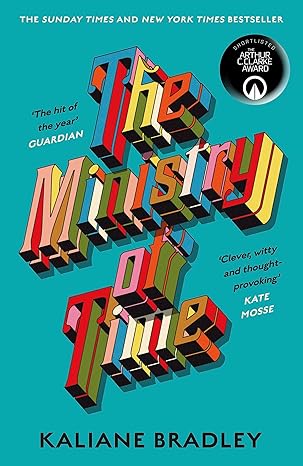
This is my fiction highlight, for light relief. It’s very hard to describe this book properly, without some spoilers, so what I will say is that it combines the genres I enjoy the most – science fiction and history – a time travelling book often has a bit of history, and this book does it very well.
The title gives you a bit of a clue, the science fiction part is time travel. And the history part involves a few different people from different periods, but the most prominent character comes from Victorian England. I do love a book that wears its research lightly, even though it is quite clear that every single detail has been checked and rechecked.
It was shortlisted for quite a lot of awards this year, pretty amazing for a first novel, so I’m not the only person who enjoyed it.
And finally, a bit of beauty to round out the post. This is a picture of the slightly faded chaise longue where I often sit to enjoy a book. The matching rug was knitted by my mother.

Your reviews are tremendous
Now I want to read every book you included!
Thanks for posting
I just saw a book of essays by Bernhardt Schlink in a book library about guilt – it’s about German guilt for the Holocaust. Interesting connection to Australia’s reluctance to consider our guilt (despite some excellent books, like David Marr’s and The Scret River – it was The Lieutenant by Kate Grenville which really brought alive to me what first settlers had done.
The Secret River was one of the first books that opened my eyes (as well as a few Henry Reynolds books) but I didn’t put David Marr’s book on this list because I couldn’t finish it – too densely full of the source material for me. I’ll see if I can find that Bernhardt Schlink book, sounds interesting.
Dear Jennifer – what a truly exceptional and eclectic list! Congratulations on pulling this together and your excellent reviews – I now have a new list of ‘must reads’!!
Thank you also for the honourable mention of ‘Not for Glory’! It has been a real joy to raise awareness about these exceptional Australians – courageous women who opened the doors of opportunity that I have been so fortunate to walk through..