As has become tradition over a surprising number of years (this is the 16th!), every year I post a list of all the non fiction books I read the previous year. I do also read fiction, but posting all of that involves revealing some of the trashy things I’ve read, so I generally just post a couple of fiction highlights.
Gripping Deep Dives
This is probably my favourite category – a deep dive by an expert into a small topic, that shows just how important it is to our lives, our planet or our history, sometimes all three! It takes enormous research, worn lightly, to do this well, as you have to bring together all sorts of unrelated threads at the same time as knowing everything about your subject, and bringing it in at the right time.
 Frostbite: How Refrigeration Changed our Food, Our Planet, and Ourselves, by Nicola Twilley
This is a classic of the deep dive genre, for me. And Twilley succeeds with this one. As an Australian, I was familiar with the massive change that happened to our economy when long distance refrigeration in ships became possible, and people in Britain started eating Australian sheep and cows. That is a tiny part of all the things that have changed because of refrigeration. The kinds of food we eat are those that are easy to refrigerate for transport, for example. The planet has far more big mammals like sheep, cows and pigs, because their meat can be transported all over the planet.
And fruits and vegetables that don’t refrigerate well (some kinds of apples, for example) have gradually disappeared from our diets as economically they don’t make enough sense to grow for the small areas they could be transported to.
 Everything is Tuberculosis: The History and Persistence of our deadliest infection, by John Green
John Green is most famous (to me) as one half of the vlogbrothers, but he is also a prolific author, fiction and non fiction, and this book is a passionate look at an infectious disease that continues to kill a frightening number of people every year. Back in the 19th century, when it was known as consumption, it was feared, but inescapable, with many romantic figures (such as John Keats, and several Brontes) dying of tuberculosis. It was also frequently used in fiction as a romantic way to kill off a beloved character. At its peak it infected most people in Europe, and the unlucky minority who went on to develop the clinical disease were mostly faced with a death sentence.
That is still true today in many parts of Africa, and John Green introduces us to several people afflicted now, and talks us through their experience of a disease that in rich parts of the world is almost 100% curable.
Both the historical experience and the current one make gripping reading – I don’t think I had realised just how prevalent tuberculosis was before antibiotics, and just how much it changed the culture. And the current experience of those in countries which still have high prevalence makes grim reading.
 More and More and More: An All-Consuming History of Energy, by Jean-Baptiste Fressoz
Thi s book was a bit depressing for me. If you are in any way interested in climate policy, you will have heard mention of peak oil, peak coal, etc, and energy transition – the point at which finally the human race moves on from forms of energy that are bad for us and the planet. But this book makes the case that in the past, we haven’t ever moved on. While most of our energy doesn’t come from wood any more, we still use a huge amount of it for energy, and other things.
After two centuries of “energy transtions”, humanity has never burned so much oil and gas, so much coal, and so much wood. Today, around 2 billion cubic metres of wood are felled each year to be burned, three times more than a century ago. ….
In many ways, coal is a new energy. The strongest trowth in its hisotry occurred betwen 1980 and 2010 (+300 percent) , leading to an increase in its share of the global energy mix, to the detriment of oil… Coal-fired power stations are on average younger (around fifteen years old) than atomic power stations( thirty two years).
Fressoz argues that the concept of transition comes from futurists – who are looking at what they think will happen. But a clear-eyed look at the history of energy suggests that the energy system tends to add sources of energy, with existing sources of energy being symbiotically linked to new ones. We need to understand how this works, in order to be realistic about how to deal with the need to wean ourselves off carbon emissions, and sadly it is even harder than it looks.
 A Cheesemonger’s Tour de France, by Ned Palmer
A very fun book to read if you are (as I was) about to go to France. Palmer is an english cheesemonger, who knows an enormous amount about cheese, and has the contacts to go and see the cheeses he writes about being made. He uses his knowledge, and contacts, to go and visit the people making the cheeses he has decided fully represent France and its cheeses. Of course, in a nation with (according to President De Gaulle) 246 kinds of cheese, choosing just 10 must be controversial. But Palmer has the knowledge to be confident and explain his rationale, and in a bonus (that was almost certainly part of his choice) he managed to visit some of the most scenic and interesting parts of the country in his search for cheesemakers.
I learned an enormous amount, particularly about how complex cheese making can be, and how incredibly varied the techniques are. That of course makes sense, given that a hard cheese like Beaufort seems to be only loosely the same as a soft, moldy Roquefort. I’m still not confident in a Fromagerie in France, but that’s mostly about confidence in speaking french, this taught me a lot about the different cheeses and their relationship to the places they are made.
Professional related
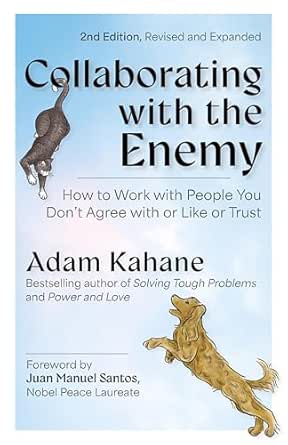 Collaborating with the Enemy: How to Work with People you don’t agree with or Like or Trust, by Adam Kahane
This book is written about extreme cases (of people still in the middle of actual civil war) who have managed to work together to improve outcomes. While most of us are far from that situation, most of us have to work some of the time with people (as the title says) that we don’t agree with, like or even trust. This book both helps you think that through, but also makes the case that in many ways, if you manage it, that is the most productive way of working with others, as the rewards can be enormous. In particular, one of his key points is that people who have a long history of distrust, and potentially don’t even agree on what the problem is that needs to be solved, can still find ways to work together to improve the situation.
Kahane sets out his theory of stretch collaboration. I’m going to quote it fairly fully, as it is the thesis of the book.
Stretch collaboration requires us to make three fundamental shifts in how we work. First, in how we relate with our fellow collaborators, we must stretch away from focusing narrowly on the collective goals and harmony of our team, and move toward embracing both conflict and connection within and beyond the team. Second, in how we advance our work, we must stretch away from insisting on clear agreements about the problem, the solution and the plan, and move toward experimenting systematically with different perspectives and possibilites. And third, in how we participate in our situation – in the role we play – we must stretch away from trying to change what other people are doing, and move toward entering fully into the action, willing to change ourselves.
These stretches require us to pluralise: to move away from paying attention only to one dominant whole, one optimum plan, and one superior leader, toward attending to multiple diverse wholes that are part of wholes, multiple emergent possibilites and multiple co-creators.
The rest of the book sets out how and why to behave this way, and it was eye opening. It’s going to be one of those books I dip into frequently.
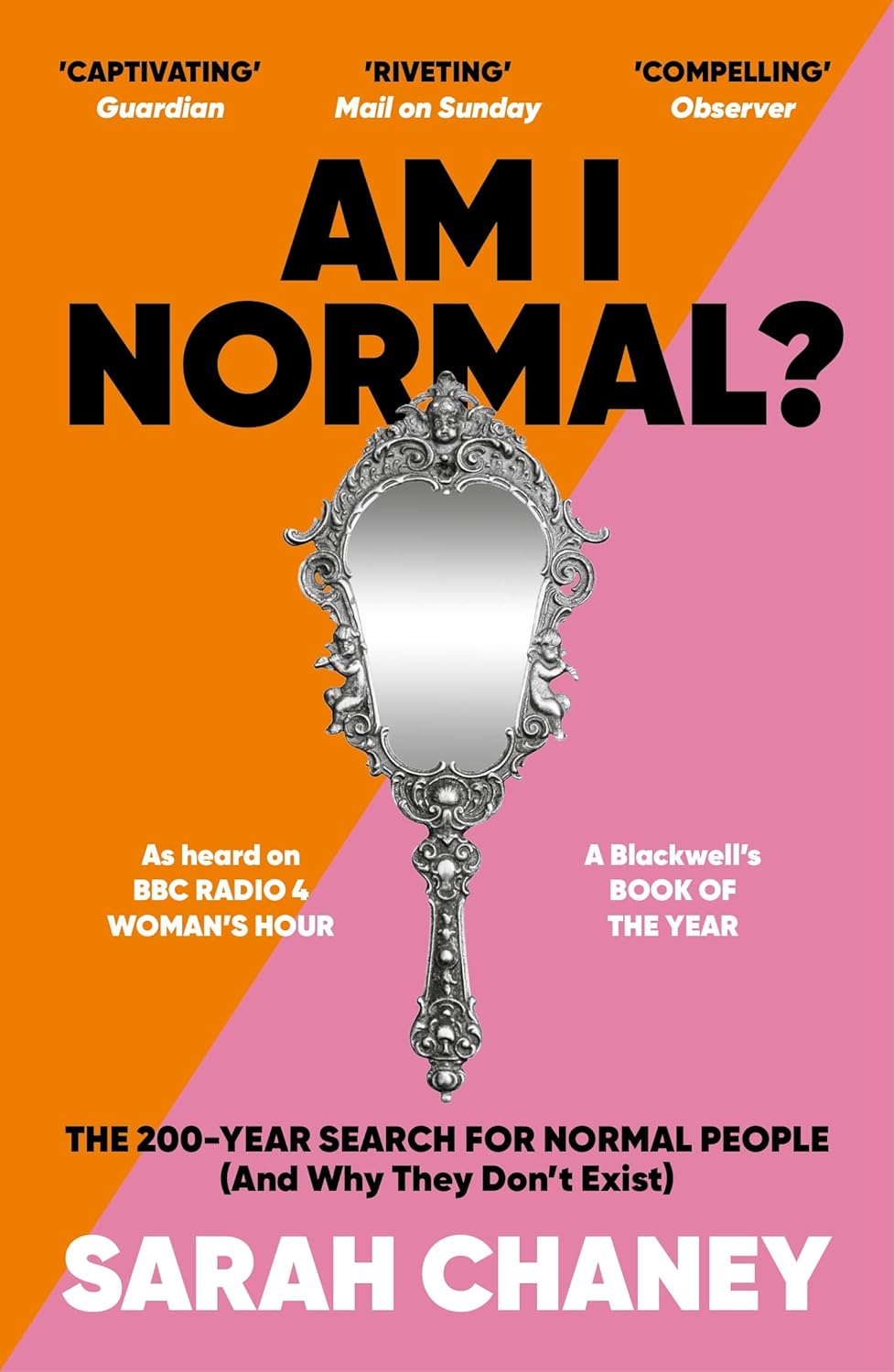 Am I Normal?: The 200 -year Search for Normal People (and Why they don’t exist), by Sarah Chaney
This is an enjoyable romp through both scientific investigation, and the concept of normality in the gloriously diverse human race. Very worth reading for anyone who has ever felt they were an outsider (which is pretty much everyone at one time or another).
The main thesis is that the very concept of “normal” is problematic – it creates an automatic othering of much of the human race in an enormous variety of fields. And the vast majority of the time, when a facet of human existence is defined as “normal” that characteristic tends to be one that is shared by the people in more powerful positions (classicly straight white men from European backgrounds).
As a statistically trained person, there is a value to the concept of normal, but given the concept of a normal distribution arose from astronomical measurement error, conceptually those who differ from the “normal” measurement (of height, weight, intelligence, etc) are by some arguments, also errors. Anyone, (who is most of us) who spent their teenage years being abnormal in one way or another probably remembers feeling a bit like they personally were an error from the norm.
Definitely worth a read for anyone interested in the use and misuse of statistics.
History
Normally history is my favourite category, but this year it has been less about new learning, and more about some fairly depressing parts of history that I already knew about. Interesting, but not uplifting. The most engrossing, for me, was the Captain Cook history, while Unsettled really made me think about my own personal relationship to colonisation and disposession.
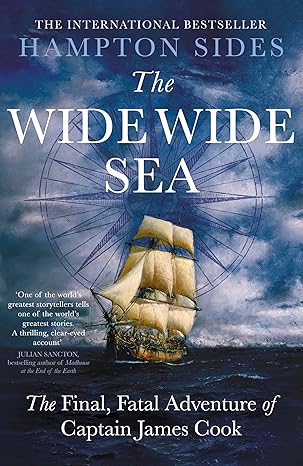 The Wide Wide Sea, the Final, Fatal Adventure of Captain James Cook, by Hampton Sides
This book made quite a few best of lists last year, and I did enjoy it. It’s the story of Captain Cook’s final voyage, the one where he was killed in Hawaii, after visiting a vast array of islands around the Pacific. There were many fascinating new facts for me in this book, including that this voyage was the first European contact with Hawaii, and that British sailors first got into tattooing on this voyage. Whether or not other people had figured it out, this was the way British people discovered tattooing.
Hampton Sides makes quite a nuanced case for Captain Cook and how much blame he should get for the horrors of colonisation that followed his voyages around the Pacific. Cook does seem to have been genuinely interested in the cultures he was discovering, and reasonably respectful, particularly on his first two voyages. But on this final voyage, he seems to have become much more of an authoritarian captain, which also spilled over into how he dealt with indigenous people on many of the places they visited.
Perhaps it was inevitable, but it seems that he became more and more arrogant, and believing in his own rightness (probably not helped by many Hawaiians believing he was a god), which went badly for him when he didn’t want to leave Hawaii.
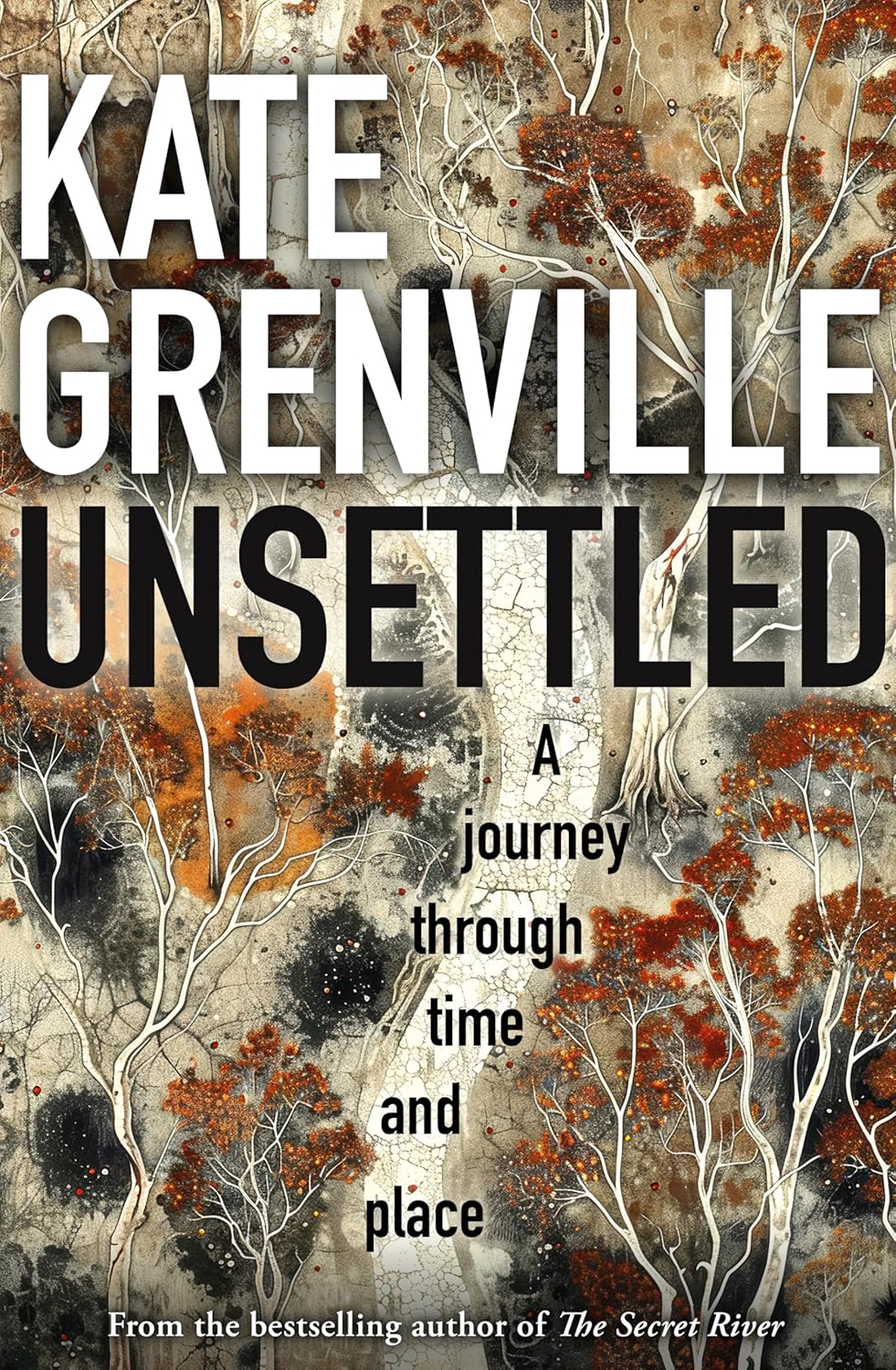 Unsettled: A journey through time and place, by Kate Grenville
Kate Grenville is the author of many fictional Australian works, most famously the Secret River, a fictionalised story of her ancestor Solomon Wiseman, who settled at Wiseman’s ferry in the early 19th century. Paranthetically, Mark McKenna (the author of my next two books) got into an argument with Grenville about the level of historical accuracy or not in her previous books.
Grenville is descended from many early settlers of NSW and Queensland, and in this book, she traces their footsteps and wrestles with her own responsibility for the injustices and tragedies inflicted by her ancestors on the original inhabitants of the lands that they settled. I’ve often thought about this issue – what responsibility to the present day beneficiaries of the British theft of Australia have? Grenville doesn’t have a firm conclusion, but my takeaway was that acknowledgement and understanding are the first step. After reading this, I saw a parallel with the various reactions to World War II – the German response has been to acknowledge and apologise for the terrible things that were done, in contrast with the Japanese response which has been much more of a washing of hands. Our Australian response to the frontier wars has been much more like the Japanese response. Acknowledgement doesn’t change the past, but it’s better than pretending that nothing bad happened.
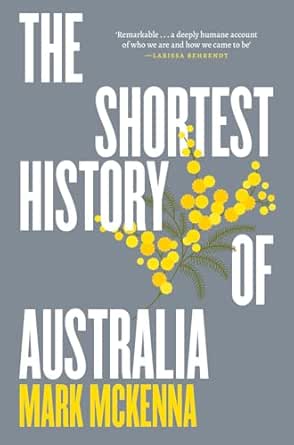 The Shortest History of Australia, by Mark McKenna
I’ve got into Mark McKenna after reading Return to Uluru (below) a deep dive into a murder of aboriginal people that took place at Uluru. McKenna is an Australian historian, and this history of Australia is very short and divided into very digestible themes – with an overlay of the aboriginal history that pervades any consideration of Australia’s settler history. Every time I read Australian history I’m astonished again that we in Australia don’t get more excited about the long indigenous history of this country – we have artefacts and paintings that are much older and more continuous than anything in Europe.
I think I would recommend this book to a visitor – anyone who would like a digestible history of Australia before coming here. It gives you a good sense of the weight of history we have all over this massive continent.
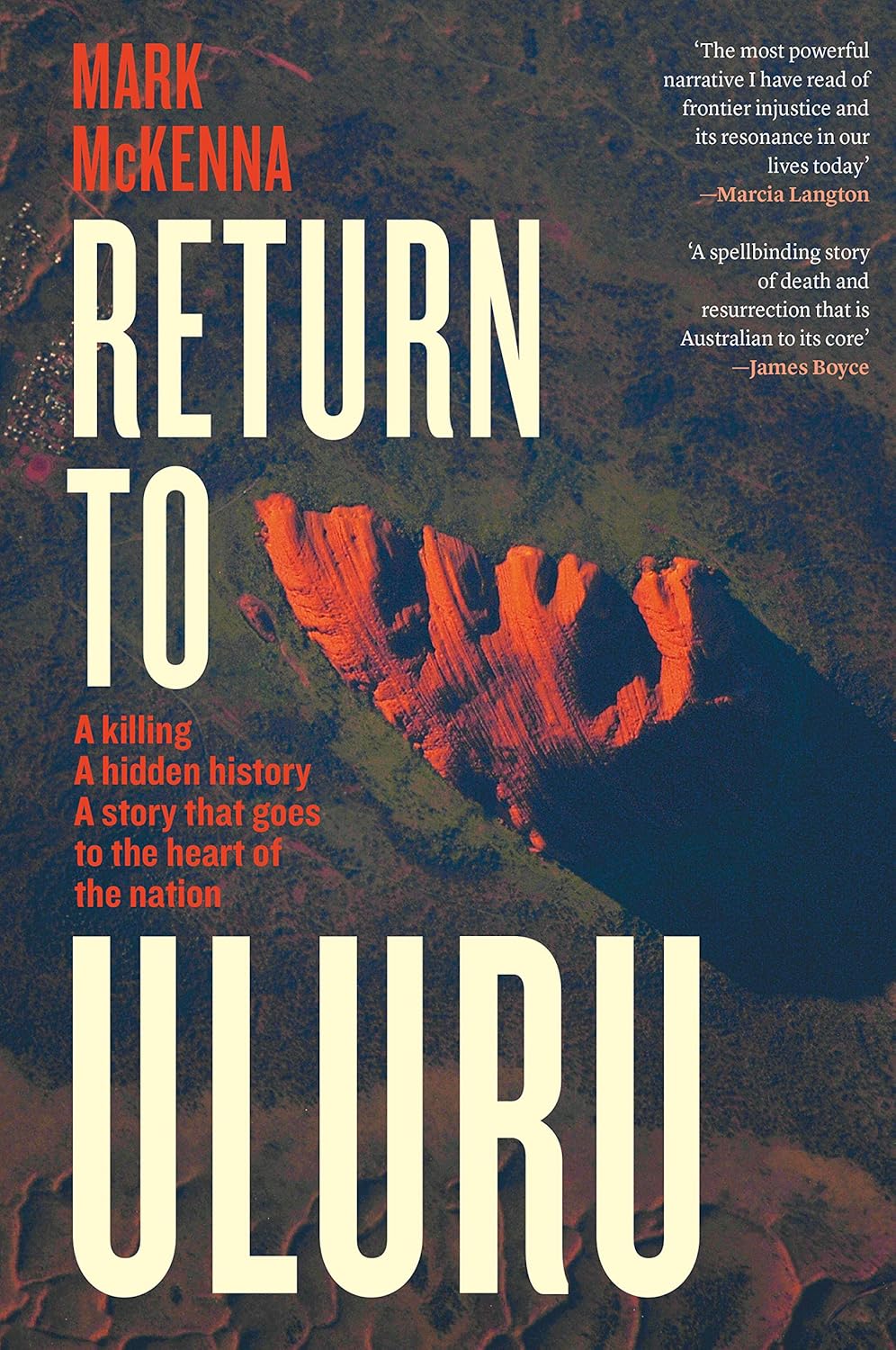 Return to Uluru, Mark McKenna
In this book, Mark KcKenna takes a deep dive into a murder that took place at Uluru in the 1930s, following a and uses it as a jumping off point to look at the whole history of white settlement in central Australia. I had just been to Alice Springs when I read this book. Alice Springs is a troubled place, with terrible relationships between the local indigenous community and the police in particular, but also many parts of the non indigenous community. This book helps explain how it got that way, at the same time reminding anyone who reads it how much of the white settlement and conquering of Australia took place almost within living memory.
McKenna uses diaries from the time, and also conversations with locals and an examination of the actual places with local indigenous elders to understand what exactly happened, and why.
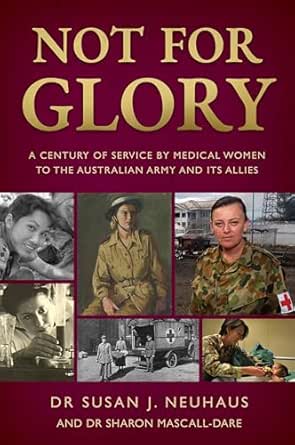 Not for Glory: A century of Service by medical women to the Australian Army and its Allies, Susan Neuhaus
Susan Neuhaus is a colleague of mine, and an ex-Army surgeon, and has written this book to celebrate the many women who, in the teeth of opposition from the medical establishment, supported the Australian and other armies in wars over the last century.
It certainly opened my eyes to the bravery and determination of so many Australian women, who didn’t take no for an answer, but were determined to serve and make a difference anyway. It is easy to forget just how sexist Australian society used to be; it’s not equal now, but it’s a long way from where it used to be.
If only these women (and so many others who didn’t manage it) didn’t have to waste so much energy pushing their way into service, they would have been able to make even more of a difference.
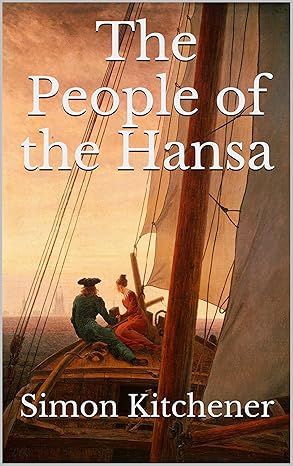 The People of the Hansa, Simon Kitchener
I was in Lübeck, the former capital of the Hanseatic league, for Christmas, and I bought this book to find out more about how it worked. It’s a fictionalised account of real people, based on documents of the time. The real people were a family of merchants in Lübeck, in the 14th and early 15th century, who traded and visited much of northern Europe – Amsterdam, London, Ipswich, Novgorod, Copenhagen, and many places in between.
The book is self published, so occasionally has a bit of a self-indulgent diversion that a strong editor would have nipped in the bud, but overall I really enjoyed it. The characters seemed real, and I ended up caring about what happened to them. And the Hanseatic league was a fascinating grouping in that time – not an empire, but very much a league of traders, whose lives felt surprisingly modern when you read about them in modern language.
I learned lots of fascinating snippets about the time – that the people of Lübeck could broadly understand most Londoners, that they built an incredibly shallow canal (a very early one, for Europe) to carry salt (one of the major products of the area) and just how long it took to get information back and forth to all the different trading hubs.
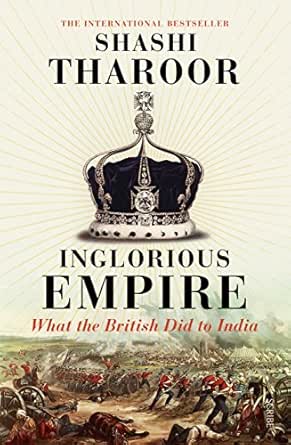 Inglorious Empire: What the British did to India, by Shashi Tharoor
This book had its origins in a speech at a debate that went viral, when Shashi Tharoor, the author, spoke on the proposition “Britain owes reparations to her former colonies”at the Oxford Union.
Based on that reception, and the realisation that the history wasn’t as well-known or understood as he had thought, Tharoor transformed the speech into a short book. The book is slightly more nuanced than the speech, because it is mostly not about reparations, but laying out the facts of what happened to India because of British colonisation, and particularly that on balance the experience was not a positive one for India as a whole.
That was the part that went viral, as India in particular is one of those places that apologists for British colonisation tend to point to as having received wonderful benefits from colonisation – the rule of law and an education system are often mentioned. Tharoor demolishes these arguments by pointing out that the rule of law and education, and many other things introduced to India by the British were part of colonisation – and mainly benefited the British, rather than the local inhabitants.
It was a pleasure to read such a well reasoned and organised book. I don’t know that much about Indian history and this was a great way to learn more.
Indignant
I struggled for a title for this section, but all of these books create indignation about an issue, if you didn’t have it already.
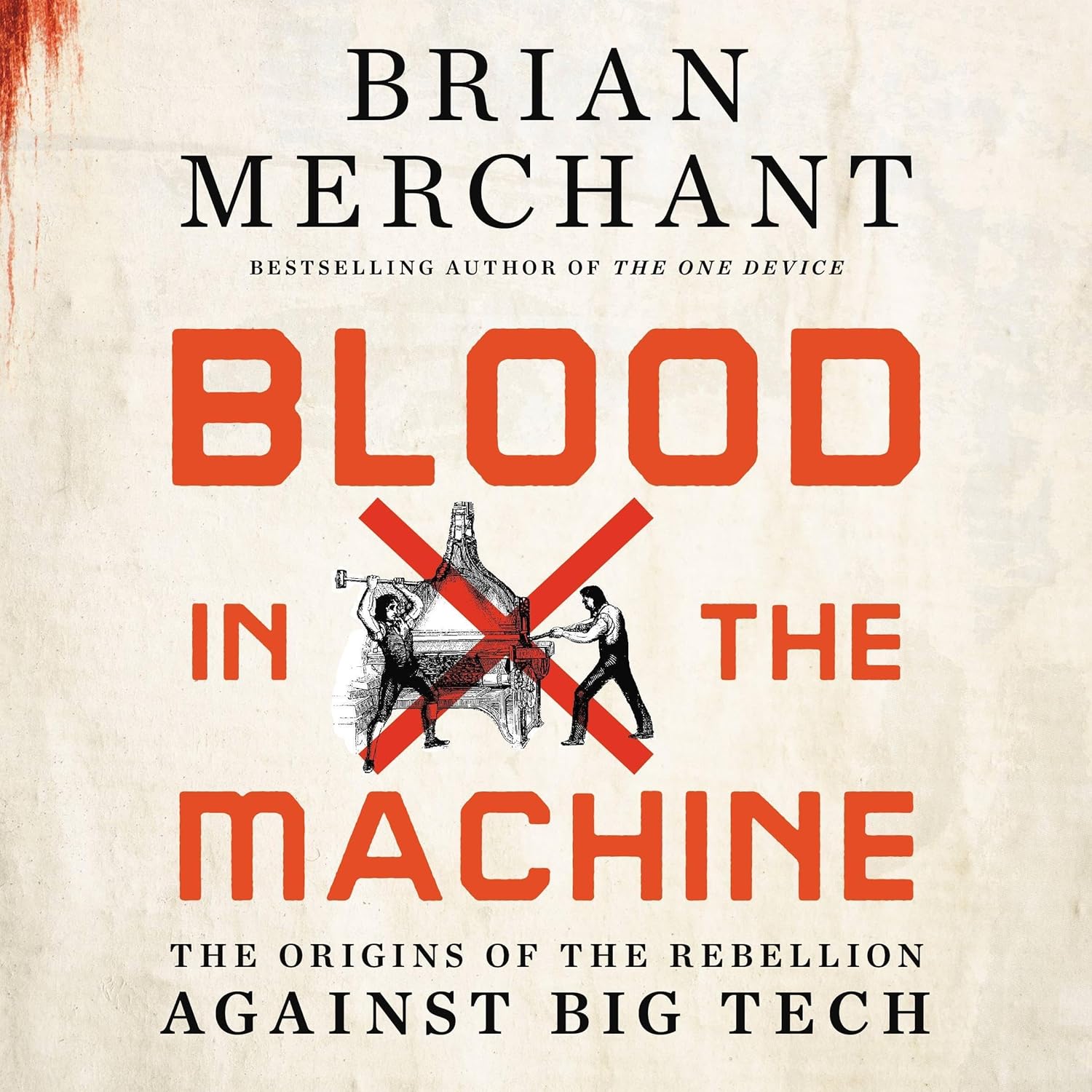 Blood in the Machine: The Origins of the Rebellion Against Big Tech, by Brian Merchant
This is a really interesting parallel history of the Luddites, who were fighting against the industrial revolution in Britain in the late 18th early 19th century, and today’s tech companies. There were many interesting parallels, but most fundamental is how the rebels were/are portrayed. My impression of the Luddites before reading this was that they were a bunch of conservatives who didn’t understand the point of technology. But of course, they were much more nuanced than that, and a lot of what they were fighting for was to stop the industrialists of the time from using new technology as an excuse to exploit their workforce more than they had been able to when individual craftsmen and women were in charge of their own destiny much more.
There were some horrific stories about children being shipped from poor houses to factories, and often worked to death, but also many instances of monopolistic behaviour on behalf of the industrialists to ensure that the alternative craft based outputs were put out of business.
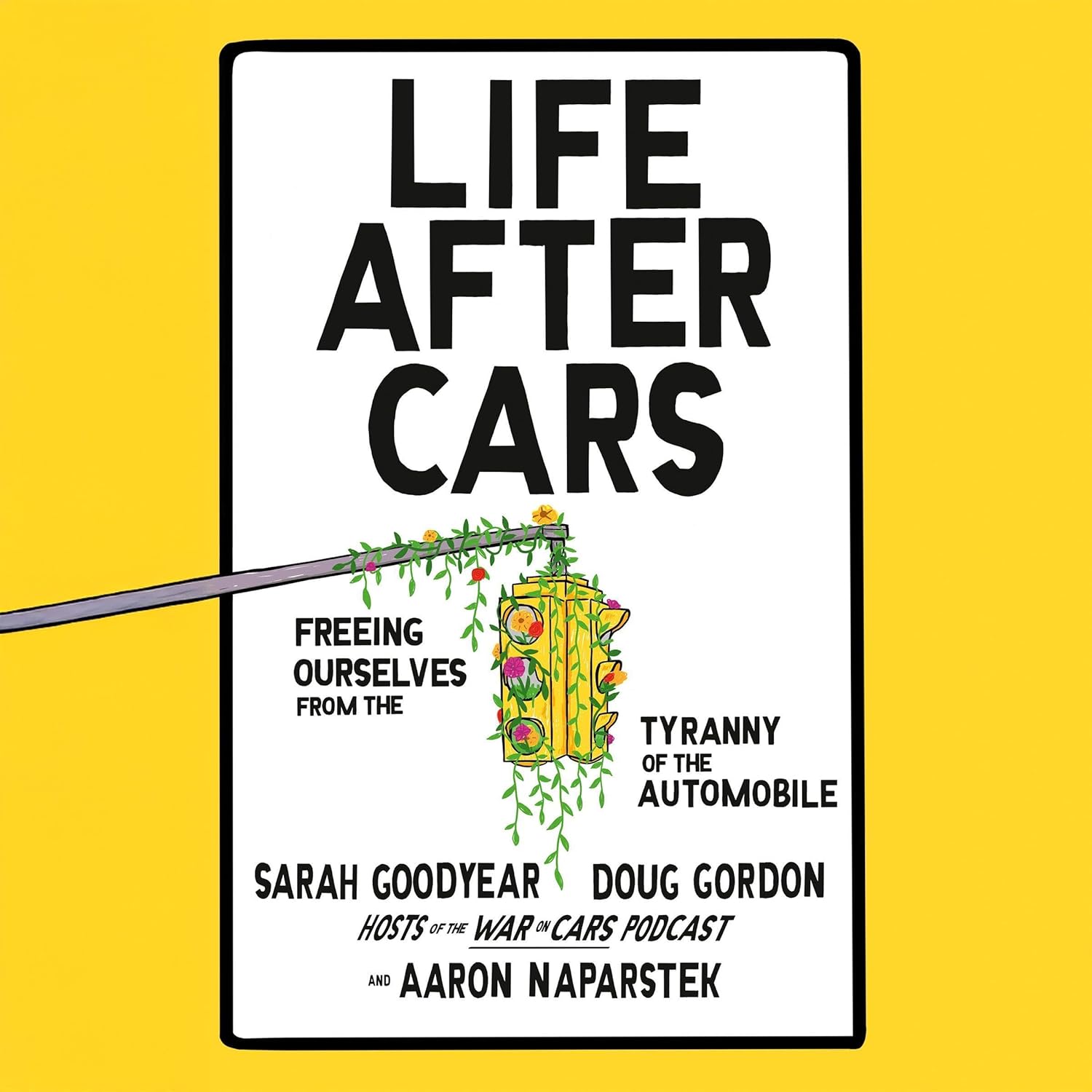
Life after Cars: Freeing ourselves from the Tyranny of the Automobile, by Sarah Goodyear and Doug Gordon
Sarah Goodyear and Doug Gordon host the War on Cars podcast, which from its title has a fairly clear point of view. This book is their attempt to reach a broader audience, by not just provoking indignation against the car, but also describing the life that is possible when society is not completely centred around the car. I’ve certainly found my view of the world changed by some of the many insights I’ve gleaned from the podcast – looking at streets and realising how much of our land is dedicated to the car vs people (both parking and also the big gashes across our cities that are freeways), and also noticing much more how pleasant a city or suburban centre can be when it is free of cars and you can stroll without having to worry about crossing the road.
This book is not going to convince everyone. But it is a great read for those who can’t quite imagine how it is possible to live in a way where cars aren’t the centre of our way of life. It certainly makes a strong case for how much more pleasant it can be. The most convincing point for me was the one about freedom for children. You often hear people nostalgic for their childhoods when they roamed the streets without parents driving them everywhere. But the main reason that doesn’t happen as much as it used to in Australia, as in the US, is that cars make it unsafe and impossible in many places to get around without a car. Safe and accessible public transport, and bike infrastructure and footpaths makes it possible for children to spend time with their friends without constant parental involvement, a win for everyone involved.
 Dead Centre: How Political Pragmatism is Killing us, by Richard Denniss
Richard Dennis is the CEO of the Australia Institute, where my daughter now works, and this book has a thank you to my her in the acknowledgements, so of course I had to read it. This is an essay of how corrosive the view “both sides are unhappy therefore this must be the right answer” can be for important issues in Australian politics.
It makes the case that the mid point of two points of view is only accidentally likely to be good policy. Often one end or the other makes far more sense. The mid-point also depends on where you started – something that becomes more obvious when you look at the policy ideas across countries – the Life after Cars book is a great example of this – the starting point of a particular issue, and the history of it in that society have much more influence on what the “sensible middle” becomes than any particularly sensible view of policy.
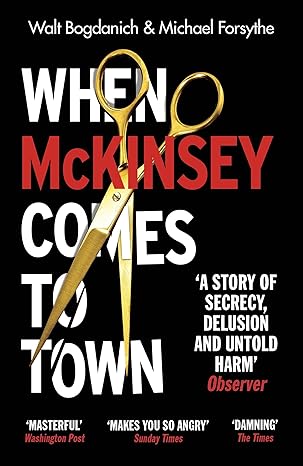 When McKinsey comes to Town: The Hidden Influence of the World’s most powerful Consulting Firm, by Walt Bogdanich and Michael Forsyth
This book had possible too much indignation even for me. It is a forensic look at all the different ways in which McKinsey sits beside the powerful in government and in big corporates and changes the world without much credit or acknowledgement. And the motivations of a group of management consultants are not necessarily to do the best for either the government or the corporate who has hired them, but to make sure there is continuing work for McKinsey.
Particular chapters focus on the well known support they gave Purdue Pharma, which has been blamed for the OxyContin epidemic in the US, work they did (for free) for the Illinois government that ended up privatising Medicaid services – leading to lots of work for McKinsey as they supported health care companies getting into the newly privatised market and many other policy spaces where McKinsey successful worked for many different sides of a problem.
Unfortunately, the indignation seemed much the same chapter after chapter, and I didn’t manage to finish the book.
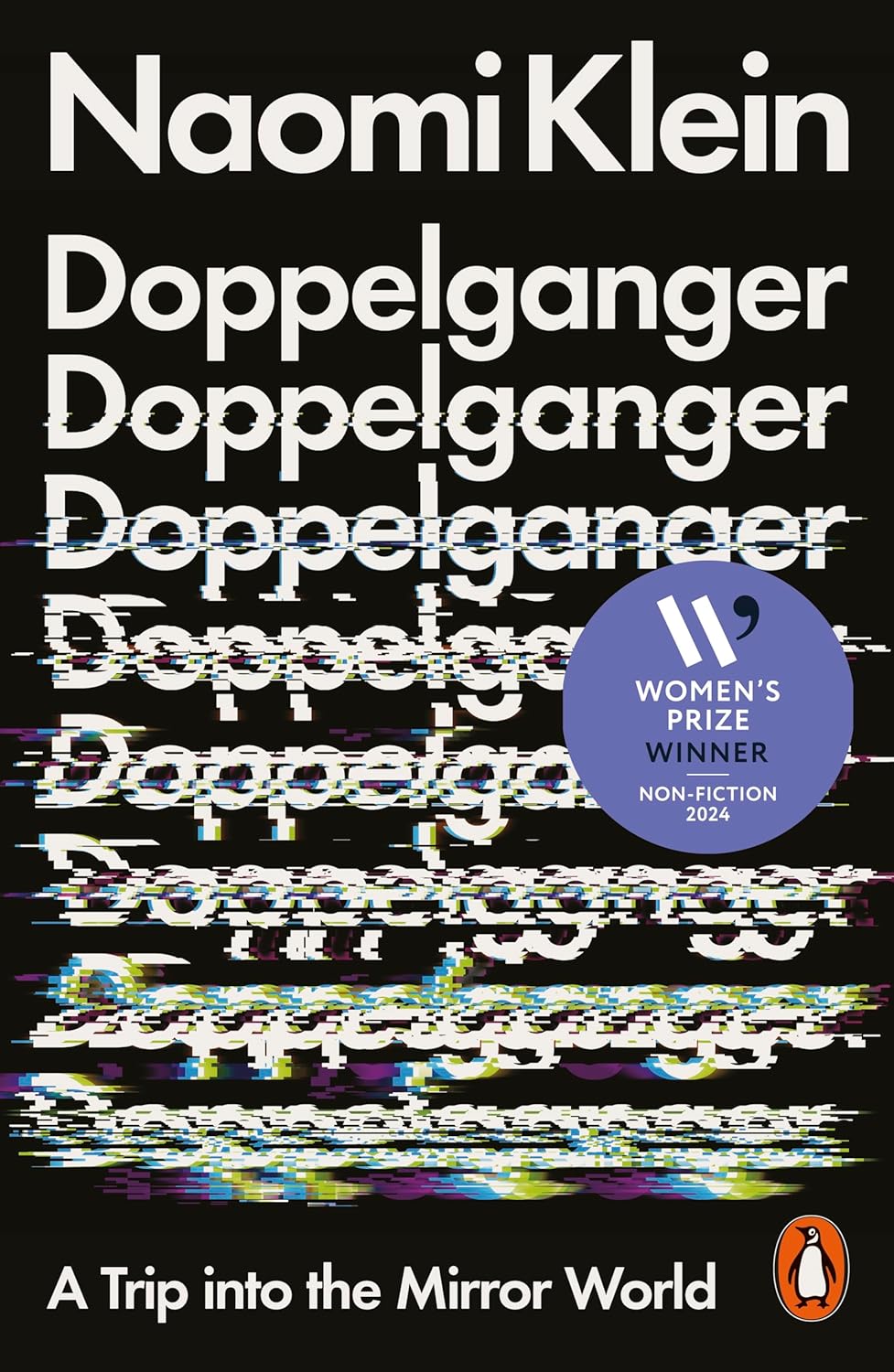 Doppelganger: A Trip into the Mirror World, by Naomi Klein
Naomi Klein is often mistaken for Naomi Wolf, so much so that she decided to write a book about the experience. Since writing the Beauty Myth (a book I devoured at the time), Naomi Wolf has become an anti-vaxxer, Trump supporter, and all-around conspiracy theorist. I had hesitated about reading this book for some time, as it seemed likely to be a bit of a whinge about the unfairness of social media.
I’m one of the people who has occasionally got the two Naomis confused. As someone with a common first name, I feel a bit embarassed to admit it, but there are other similarities.
As Naomi (Klein) says:
We both write big-idea books (No Logo (Klein), Beauty Myth (Wolf)). We both have brown hair that sometimes goes blond. We’re both Jewish. We once had distinct writerly lanes (Wolf being women’s bodies, sexuality and leadership, Klein’s being corporate assults on democracy and climate change). But by 2011, those lanes had begun to go wobbly.
But Klein takes the experience of being forced to watch Naomi Wolf’s career and viewpoints descend into conspiracy from front row seats (often by being blamed for them) and turns it into a fascinating exercise of understanding how many people are dragged down these conspiracy theory rabbit holes, what Klein describes as the “Mirror World”, a real of “uncanny people” and upside-down poltics”, where facts are optional and there’s also money available from following people down that conspiracy rabbit hole. It’s a gripping account of the changes that have happened it politics as so many parts of the left and right have wandered down various conspiratorial traps.
A great companion read to Van Badham’s excellent QAnon and On from a few years ago.
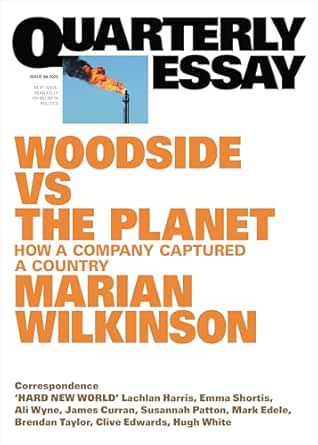 Woodside vs the Planet: How a Company Captured a Country, by Marian Wilkinson
Wilkinson has written a lot about the politics of climate change in Australia, a country where too much or not enough action on climate change has brought down quite a number of prime ministers and governments over the last 20 years. This essay is a deep dive into the West Australian experience, and just how much of Australia’s gas policy has been captured by the mining company Woodside.
There are a lot of numbers published on all sides of the climate debate of just how much [mining for fossil fuels is essential to the Australian economy] OR [fossil fuel miners are completely subsidised by the Australian taxpayer]. This essay makes a very strong case for the latter, and the infuriating part for me, is that it isn’t clear to me what even the political players gain from all this support of Woodside. The donations to the parties aren’t that enormous, but both sides of politics seem to be captured by the economic arguments, or perhaps the media support that fossil fuel miners get.
Fiction highlight
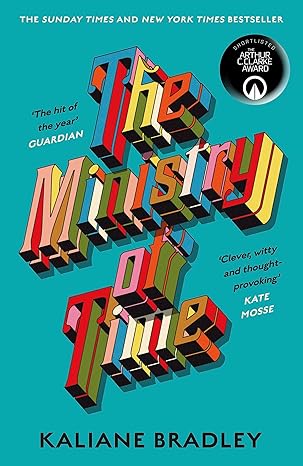 Ministry of Time, by Kaliande Bradley
It’s very hard to describe this book properly, without some spoilers, so what I will say is that it combines the genres I enjoy the most – science fiction and history – a time travelling book often has a bit of history, and this book does it very well.
The title gives you a bit of a clue, the science fiction part is time travel. And the history part involves a few different people from different periods, but the most prominent character comes from Victorian England. I do love a book that wears its research lightly, even though it is quite clear that every single detail has been checked and rechecked.
It was shortlisted for quite a lot of awards this year, pretty amazing for a first novel, so I’m not the only person who enjoyed it.
And finally, a bit of beauty to round out the post. This is a picture of the slightly faded chaise longue where I often sit to enjoy a book. The matching rug was knitted by my mother.